

In Australia, card payments dominate everyday transactions. Recent data shows that card-based payments now account for the majority of consumer spending, while cash usage continues to decline each year.
If you run a business, customers already expect to tap, swipe, or pay online without friction. When you cannot accept card payments, sales slow down, and trust drops.
This guide explains how to accept credit card payments in Australia, which methods suit different business models, what it costs, and how to set everything up with confidence.
Ways Australian Businesses Can Accept Credit Card Payments
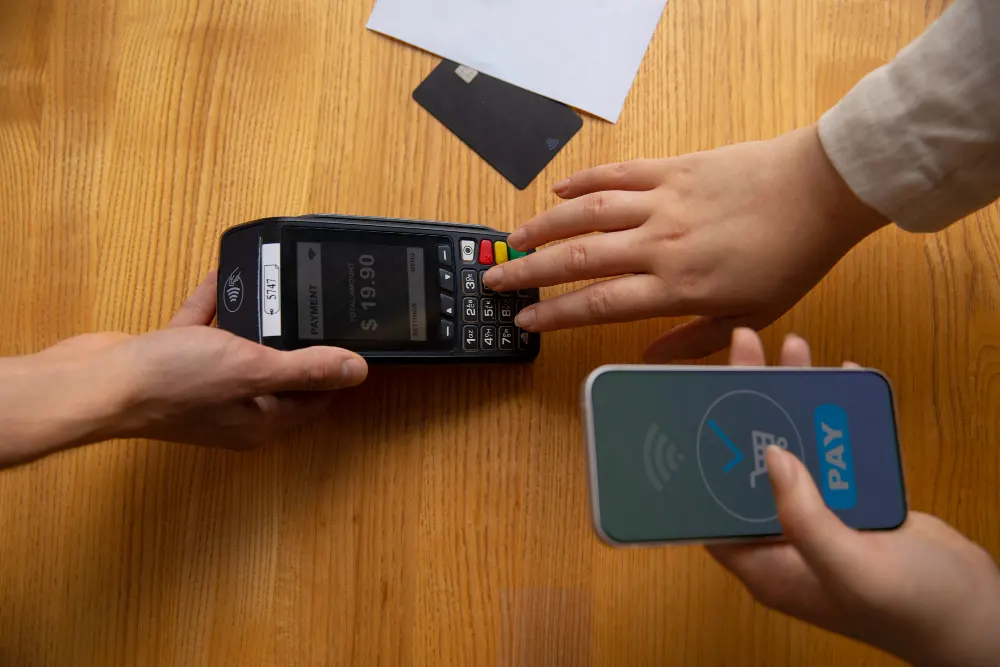
The way you take payments affects everything from your daily workload to how much your customers enjoy shopping with you. The most common methods of how to take credit card payments in a retail environment include:
1. In-Store Payments with Card Terminals
Even with the rise of online shopping, about 43 percent of Australians still like to buy things in person. If your business has a physical location, credit card terminals make transactions fast and easy.
- Countertop terminals are perfect if you have a dedicated checkout spot, like a retail store or a cafe. They are fast and usually have the most stable connection.
- Portable terminals are the way to go if you are doing table service or running a market stall. They run on Wi-Fi or mobile data, so just make sure the battery is charged.
- Integrated POS terminals are great because they talk directly to your sales and inventory software. This means you don’t have to manually enter the sale amount, which reduces human error and makes your end-of-day balancing much easier.
2. Accepting Credit Cards Online via Payment Gateways
Online shopping is growing rapidly in Australia, now accounting for about a fifth of all retail spending. Online payment processing supports websites, online ordering portals, and customer accounts.
When you accept credit card payments online, customers enter card details through a secure payment page. The payment gateway encrypts this data and sends it to the card network for approval.
There are two main ways Australian businesses accept credit cards online.
- Merchant Account with a Payment Gateway
This is a more traditional setup where you deal directly with a bank. It is a good fit for larger businesses with high sales volumes. It takes a bit longer to get approved because banks assess business risk, trading history, and financial stability. But it can be cheaper in the long run if you are processing a lot of sales.
- Third-party processors
These services combine the merchant account and payment gateway into one service. Setup happens quickly, and approval requirements remain simpler.
This option suits small, growing businesses that want to start accepting payments quickly. Fees are usually higher per transaction, but admin effort remains low.
Here is a quick comparison of both options:
| Feature | Merchant Account + Gateway | Third-Party Processor |
| Setup time | Longer approval process | Fast onboarding |
| Checkout control | High | Limited |
| Admin workload | Higher | Minimal |
| Fees at low volume | Higher | Predictable |
| Fees at high volume | Lower | Can increase |
| Best suited for | Established businesses | Small or growing businesses |
3. Mobile & App-Based Credit Card Payments
If you are a tradie or run a delivery service, you can take payments right on your phone. You get paid as soon as a job is done. It saves you from having to carry around a separate terminal and lets you avoid chasing as many unpaid invoices later.
4. Over-the-Phone & Remote Payments
Sometimes you need to get paid when the customer isn’t standing in front of you. In that case, you can use these methods:
- MOTO payments involve typing in card numbers over the phone. These are handy but do carry a higher risk of fraud.
- Virtual terminals enable your office staff to accept payments via a secure web browser.
- Payment links are becoming very popular. You just text or email a link to the customer, and they pay on their own device. It’s secure and much easier for everyone involved.
Understanding Fees & Costs of Credit Card Payment Processing
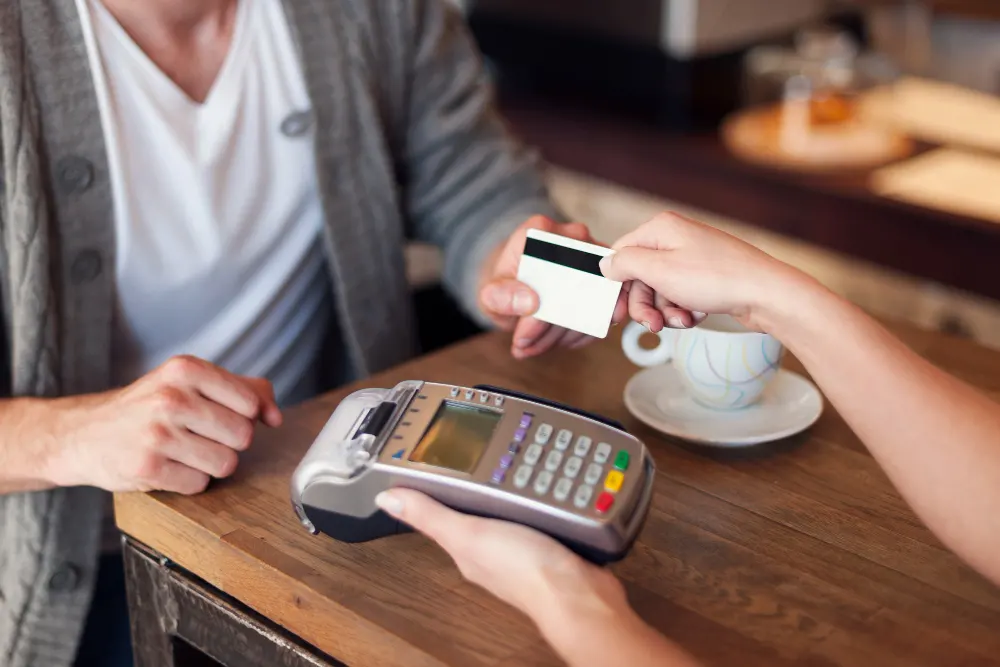
Accepting credit card payments involves more than just the advertised rate. Here’s a quick overview of the main costs:
| Transaction Fee | A percentage charged per sale | 1.1%–2.2% |
| Monthly Fee | Some providers charge a base fee | $0–$30 |
| Hardware Cost | EFTPOS terminal or card reader | $59–$300 |
| Chargeback Fee | If a customer disputes a payment | $25–$40 |
- Transaction fees: These are charged per sale and scale with your transaction volume.
- Monthly fees: A fixed cost that adds predictability to your expenses.
- Hardware costs: Vary depending on the type of terminal or card reader you choose, as well as its durability and features.
- Chargebacks: Occur when a customer disputes a payment. It adds administrative work and may delay cash flow.
Security And Compliance When Accepting Credit Card Payments
Accepting credit card payments, protecting your customers’ data, and preventing fraud are equally important. Let’s take a closer look at the key security and compliance measures every business should follow when accepting credit card payments
- PCI DSS Compliance
These are the global rules for card safety. Most modern providers handle the technical side for you, but you still need to make sure your staff aren’t doing things like manually storing card details. This can lead to penalties and loss of payment privileges.
- SSL Certificate
If you sell online, you must have an SSL certificate. It’s the digital lock that protects information as it travels from the customer’s browser to your payment system.
- Fraud Prevention
Fraud Prevention tools like CVV checks and address verification can save you a lot of money. These simple steps help stop fraudulent transactions before they occur, protecting your revenue and reputation.
How EasyVend Supports Credit Card Payments for Australian Businesses
EasyVend is a local Australian platform built specifically for people in the food and beverage industry. It handles everything from your orders and deliveries to your invoicing and payments in one spot.
EasyVend supports credit card payments through invoice-based payment options. Businesses can send invoices with secure card payment links. Payments link directly to customer accounts. This process simplifies how to receive credit card payments and reduces manual reconciliation.
Conclusion
Accepting credit card payments shapes how customers experience your business and how quickly you get paid. The right setup improves cash flow and supports growth. By understanding card types, payment methods, fees, and security requirements, you can choose a system that fits your operations without unnecessary complexity.
For businesses that want to keep orders, invoices, and credit card payments connected, EasyVend offers a practical solution built for Australian businesses.